Showing posts with label Japanese Tattoos. Show all posts

Tuesday, August 17, 2010

Japanese Tattoos - A Brief History

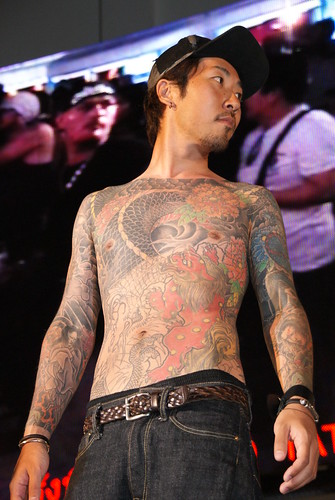
The traditional Japanese tattoos known as 'horimono' became very popular among the people of the 18th century or the Edo period. The most popular choices for the designs of the tattoos were the images from traditional water color paintings, picture books and woodcuts. Understanding the history and background is as important to experience and enjoy the Japanese horimono tattoos as it is to preserve their traditions. The Edo period was like a period of Cultural Revolution for the Japanese. There were many changes that happened during that period at different levels of the society. A different class of people grew up out of the ordinary people of Japan, who found lot of interests in fashion, comedy, drama, novels, songs, and theatre. So, a unique and separate culture began to grow up.

Japanese Tattoos
As the society of Edo progressed, the ordinary people began to take pride in activities of fashion. Gradually, the Edo working class people began to imitate the heroes from the folk stories they used to read in the books (especially the picture books) and comics and other artworks as popularized by the famous woodblock artist Kuniyoshi. Getting highly impressed from these artistic works, the people began to tattoo themselves ritualistically and painfully with the designs based on folklore, such as dragons, Chinese lions, and giant snakes, and also with religious figures with the help of sharp needles for inserting pressed charcoal ink under their skin.

Japanese Tattoos
The people who carried out the process of tattooing were mostly the woodblock artists who simply had to exchange their wood-carving blades for long and sharp needles. With time, some of these people became so much involved with tattooing that common people began to accept them as tattoo specialists. This is how the unique Japanese traditional body art form, horimono was formed.

Today, it is very common to have tattoo conventions in Japan as well as in the West. But to have such conventions in the Edo period in Japan around 150 years earlier is itself a strong indicator of the Japanese having a long and rich history of tattoo culture. Even though there are no photographic record of their works and designs, lot of books are available today which describe the life and work of many tattoo artists of the Japanese Edo period.

Japanese Tattoos
One very famous tattooist from the Edo period is Horiuno. Horiuno was born in 1843. He became a tattooist at the age of 20. But before beginning to work full time from his age of 40, he travelled extensively throughout Japan, going from place to place like Osaka, Kyoto and Shizuoka. However, he continued doing his business well into his seventies and much of his work can be seen even today. Most of his customers used to work in the local construction and manufacturing industries, and in 1912, some of these people of the Kanda area formed the Kanda Choyu-kai, meaning "Tattoo Friends Society of Kanda", and after another 10 years, the society was extended to outside the Kanda area, and formed the Edo Choyu-kai.

Japanese Tattoos
All the members of this group, who are mostly labourers such as construction workers, carpenters and plasterers, meet every year at places like Ojinanushi-no-taki and Marukotamagawaen, take part in mass outdoor banquets, or in festivals such as the Asakusa Sanja-matsuri, and present their intricate and extensive body art tattoos with pride. Horiuno was known as the most talented tattooist from Japan and was famous throughout Japan and also overseas. However, at that time there were many other equally skilful tattooists in Japan, such as Horikane, Kyuta, Horiiwa, and Nekokichi.

Japanese Tattoos
If you have grown tired of your tattoo and want to have it removed there are a number of options available, home and DIY methods have worked for people but the highest success rate comes with surgical methods. To remove a tattoo with excision can be costly but it's far less painful with a greater success rate. Take a look at the effect of tattoo excision.

Thursday, August 12, 2010

History of Japanese Tattoos

The Japanese tattoo has a very long history, and may have made its first appearance as far back as the 5th century BC. However, tattoos did not gain respectability for a very long time. From the 6th century AD onwards, they were reserved exclusively for punishment and both criminals and untouchables were identified, with marks on their arms or foreheads.

History of Japanese TattoosIt was only in the late 17th century that the tattoo began to evolve from a shameful brand into a decorative embellishment. But it was not until the mid-1800s that it really started to take off, under the influence of a very popular book called Suikoden or The Water Margin.

Finally, just as high society was becoming interested towards the end of 19 century, the government decided that tattooing was a threat to public morality and tried to outlaw it altogether. The country was being opened up to the West for the first time and the fear was that tattooing gave outsiders the wrong impression, suggesting that Japan was a superstitious nation and out of touch with the rest of the world. Ironically, the ban against tattooing did not extend to the incoming foreigners who were thrilled by the intricacy of the Japanese work and only too happy to submit themselves to the needles of the masters.

History of Japanese Tattoos

Even today, the tattooed are a very secretive people who tend not to display their decoration in public and prefer to leave a river of clear skin running down the chest so that they can still wear the traditional hapi coat without fear of exposure.

History of Japanese Tattoos

In Japan, where the body is treated as a whole canvas, the tattoo is a work of art which may take many hours to complete. The tattooes must be only too well aware of the commitment , both of time and money, involved. What is it then that motivates them? Perhaps it is the desire to acquire a badge of belonging or to undergo a rite of passage which will mark the transition into adulthood. Or maybe they see their tattoos as talismen to keep them safe from danger or disease. Whatever their motivation, once tattooed, they will never be fully naked again.

Wednesday, August 11, 2010

Cool Japanese Tattoo Ideas

When it comes to cool tattoo ideas you can't get much cooler than Japanese. Japanese tattoos can be called irezumi or more correctly horimono and are often very colorful and highly detailed. Getting a good one pretty much guarantees kudos from people due to their exotic origin and great design.

Koi Japanese Tattoo Ideas
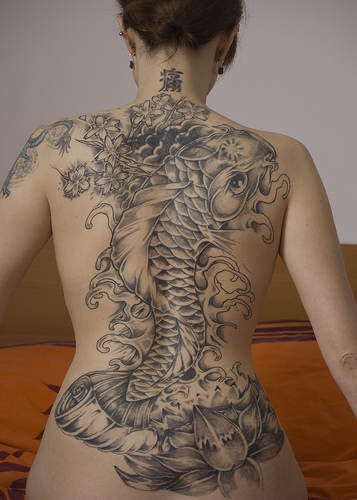
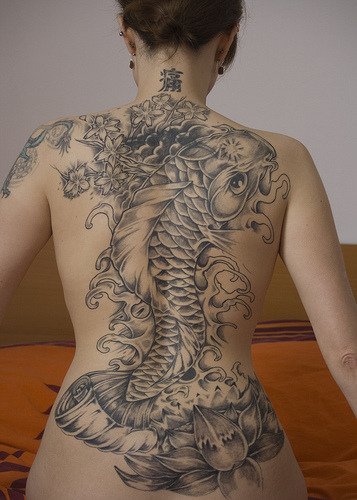
1. Koi - Nishikigoi
Now you may think it odd to have a fish tattooed onto your body but in Japan these fish are considered to be living ornaments and if you see some of them you'd have to agree. These tattoos are often done swirling in a mass of colorful waves.

Geisha Japanese Tattoo Ideas
2. Geisha
Geisha women train from an early age to be perfect entertainers and hosts to their guests. Mastering skills such as music, art, dance and much more over many years. Their style of dress and make up is famous the world over and a traditional geisha tattoo done well can look incredible. The key with geisha is subtlety. Avoid going for something excessive and over the top as you'll be a laughing stock if you have a geisha riding a dragon firing ice arrows.

Anime Japanese Tattoo Ideas
3. Anime
Anime is everywhere in the US with a never-ending stream of fans and artists. Not only are they cool - they never fall out of fashion. You could get a character designed for you or choose one of the many already in existence. Akira perhaps? Be careful not to choose something too popular though as you'll risk looking like every other anime obsessed fanatic out there. Most tattoo studios have someone capable of producing good quality anime designs from scratch so check out your local studio to get ideas on anime designs.
Dragons Japanese Tattoo Ideas
4. Dragons
One of the most popular forms of tattoos is the Japanese dragon. Which is understandable considering the powerful look of the beasts and the huge range of possibilities available. Green, red, yellow, blue, black and everything in between with great detail throughout. Be sure to research dragon tattoos thoroughly though as certain aspects can have specific meanings. Such as the number of 'fingers' on the claws or the color of the dragon. The last thing you want is a dragon that represents female fertility.
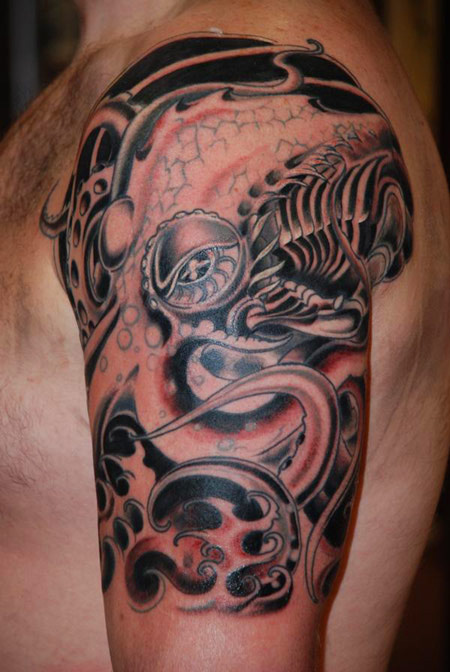
Thursday, August 5, 2010

Japanese Tattoo Lettering

Japanese Tattoo Lettering
Japanese Tattoo LetteringJapanese tattoos and tattoo lettering are steeped in tradition, symbolism and mysticism. From their roots as religious symbols to their usage as signs of the Yakuza, to their current day popularity in the West, Japanese tattoos are unique to both the wearer and the artist. Find out about the different types of Japanese tattoos and tattoo lettering, before you decide to get one yourself.

Tuesday, July 27, 2010

Japanese Tattoo Cherry Blossom

Japanese Tattoo Cherry Blossom
Japanese Tattoo Cherry BlossomJapanese Tattoo Cherry Blossom

Japanese Tattoos Letters Design

Japanese Tattoos Letters DesignJapanese tattoos letters are perhaps one of the most popular tattoo designs – but it seems everyone has a Japanese character tattooed on their body. Tattoos are supposed to be created unique to those that have chosen to get the tattoo – but when one thousand other people have the same character on the body, how can you choose this type of tattoo? Well, you can – but is important to put your own customizations on the tattoo, to make it the right choice for you.

LinkWithin

Related Posts Plugin for WordPress, Blogger...